



Stand by the dish pit at the end of a busy Friday and watch what comes back. Half a side of fries. Most of a risotto. The last third of a steak somebody meant to box up and didn't.
Every one of those plates was food you paid for, prepped, cooked and sent out. And more guests are telling restaurants they'd rather get less of it in the first place.
Why smaller portions are back on the menu
For years, a heaping plate was how restaurants showed value. Add more pasta or potatoes, nudge the price up, and everyone felt like they got a deal. That math is getting harder to defend.
Start with who's sitting in your dining room. GLP-1 medications like Ozempic and Wegovy have changed how a lot of people eat, but they haven't kept them home. A National Restaurant Association survey from May 2026 found GLP-1 users bought from restaurants 7.6 times in the week before the survey, compared with 5.1 times for non-users. What changed is the order: 49% said they now choose smaller portions.
When the menu doesn't offer that, guests improvise. In an August 2026 Toast survey of GLP-1 users, people described ordering off the kids' menu, splitting entrées, or asking for a box before the food even arrives. 87% said they'd likely order a smaller version of a regular item if it were on the menu.
It isn't only people on medication, either. Older guests, the lunch crowd, anyone saving room for dessert. They've been asking for this for years.
Then there's what ends up in the bin. ReFED, the food waste nonprofit, estimates that about 70% of the food that goes uneaten in restaurants is plate waste: cooked, plated, served and scraped. ReFED's modeling puts the upside of offering different portion sizes at roughly 2.35 million tons of waste avoided and about $547 million saved across foodservice every year.
Plenty of chefs still hate the idea, and nobody's asking you to shrink the signature ribeye. The point is to give guests a choice so they stop hacking your menu to get one.
Where it goes sideways
Most operators start by cutting the portion and keeping the plate. Put a lunch-size serving in the middle of a full-size, narrow-rim dinner plate and it looks lonely. Guests read the empty space as "less," even if you dropped the price to match. You've cut food cost and made the dish feel stingy at the same time.
Switching to smaller plates fixes the look, but now you're stocking a second set of plates, and the table looks different depending on what people ordered.
Plating pros know the fix: look at the rim instead.
How a wide rim makes a smaller portion look full
Take two plates with the same outside diameter. One has a wide rim and a smaller well in the middle. The other has a thin rim and a big, open well.
Put the same portion on both. On the wide-rim plate, the food fills most of the well and looks generous. On the narrow-rim plate, it's surrounded by open space and looks small.
[Insert rim comparison graphic here]
Psychologists call this the Delboeuf illusion. A circle looks bigger when a ring sits close around it and smaller when there's a lot of space between them. A Stanford team tested it on plates in a study published in 2013. Across 338 adults, the same food looked about 10% larger by area on plates with wide rims than on plates with very thin rims. They used photos rather than real meals, so treat it as a strong signal, not a guarantee. Most chefs will tell you it matches what they see on the pass.
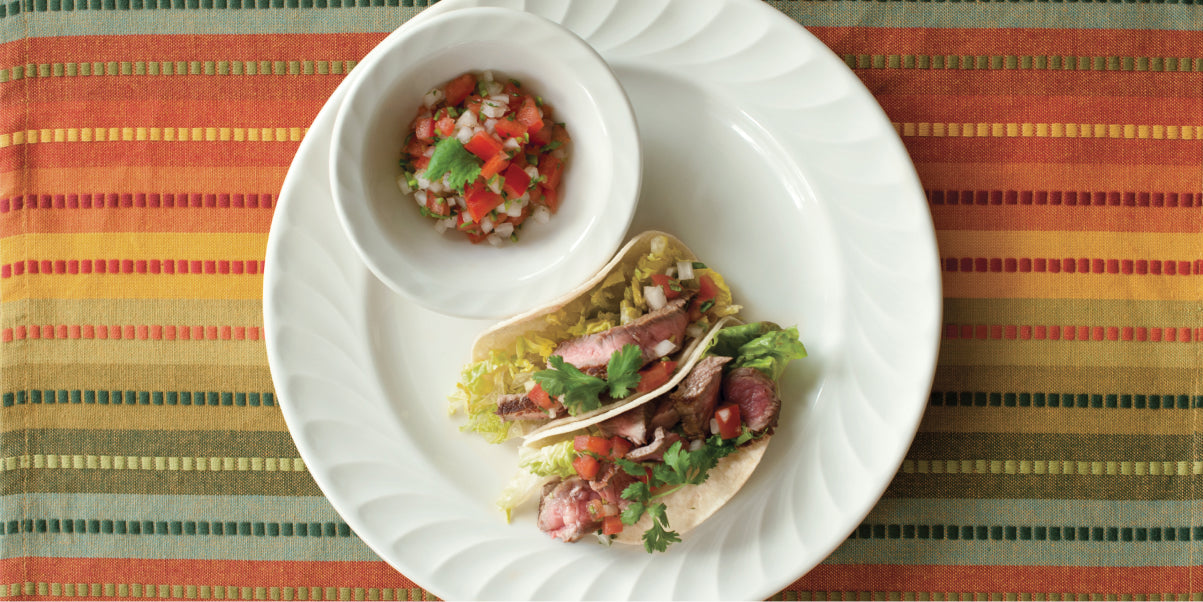
In practice, a half order or lunch size fills the smaller well and still looks plated on purpose. And because the plate is the same diameter, one wide-rim plate can carry both the full portion and the smaller one, so you aren't stocking a second set.
Tuxton wide-rim collections to look at
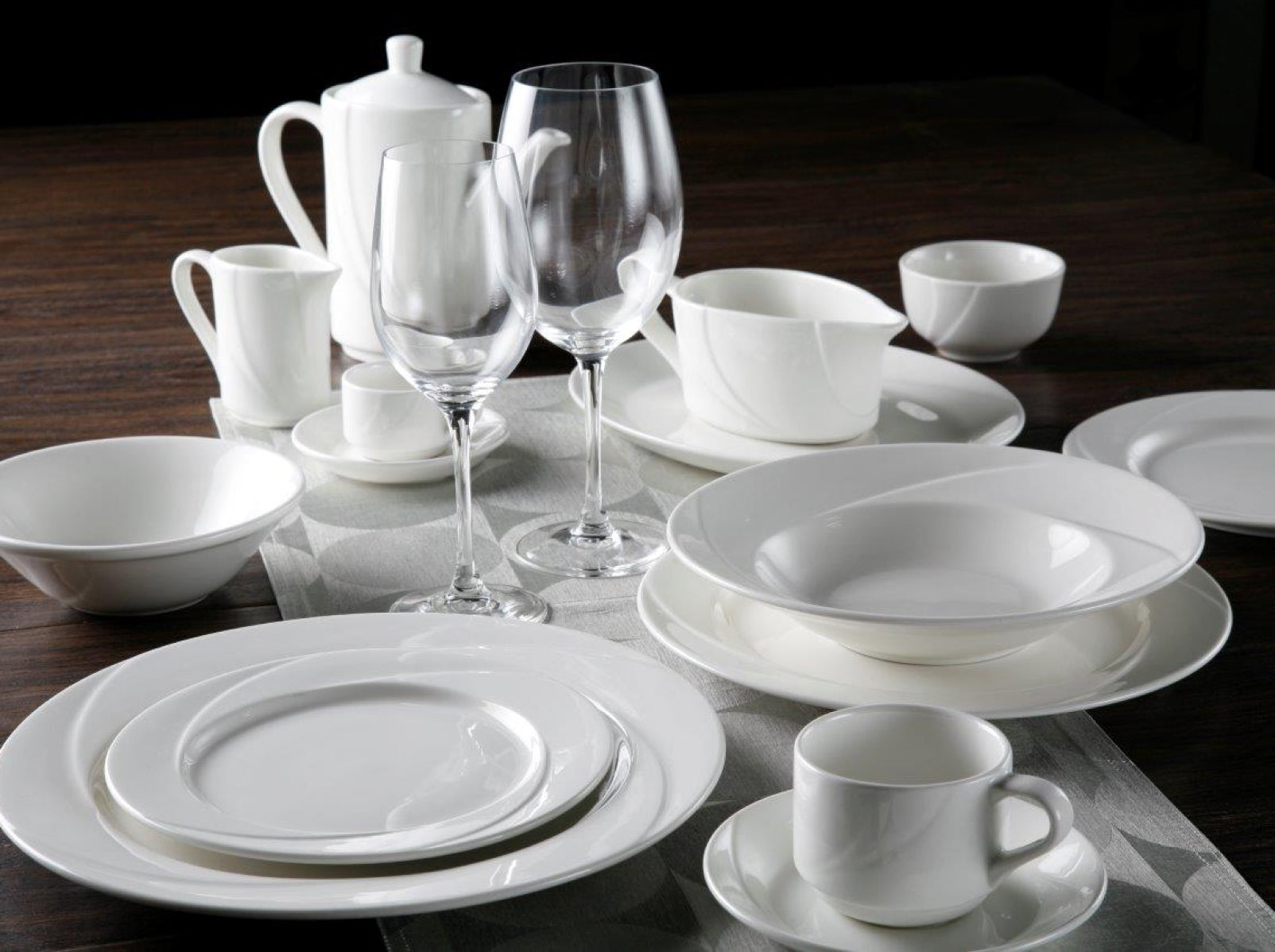
Tuxton makes several lines with a wide rim, in eggshell and porcelain white, so you can match what's already on your tables:
-
Columbia: eggshell with a rolled edge, in six plate sizes from 6¼" to 12⅜".
-
Green Bay: eggshell with green bands, a classic diner look.
-
Meridian: another classic eggshell line, with an embossed design.
-
Alaska: a porcelain white staple, with everything from plates and pasta bowls to rim soups.
-
Sandbar: porcelain white with an embossed rim, plus wide-rim pasta bowls that suit half-portion pastas.
-
Charleston: porcelain white with a scalloped edge, plain or dressed up with a blue band.
-
Chicago and Pacifica: two more classic elevated porcelain white lines with an embossed finish.
Tuxton china is covered by its Lifetime Edge Chip Limited Warranty against edge chipping under normal use. On a wide-rim plate that counts for a lot, since the rim is the first thing a guest sees.
How to add smaller portions to your menu
The plate does half the work. The menu does the rest.
-
Put it in print. A "smaller plate" option listed next to the regular price gets ordered. One that guests have to ask about mostly doesn't.
-
Start with what comes back. Pastas, rice bowls, anything built on a big starch base. Your dishwasher already knows which dishes those are.
-
Run the margin before you set the price. The protein shrinks, but the cook's time, the server's trip and the wash cycle don't. Make sure the smaller plate still earns its spot.
-
Name it like a choice. "Lunch portion" or "light bite" sounds like an option. "Reduced" or "diet" sounds like a punishment.
-
Write the smaller portion onto the recipe card. Spec it by weight and show it in the line photos, or it'll creep back to full size on a busy night.
-
Weigh what comes back for two weeks before the change and two weeks after. That number will tell you more than any survey.
Shared plates and holiday sides
A smaller portion doesn't have to mean a smaller plate for every guest. Plenty of tables would rather order a few things for the middle and pass them around. Shared sides let everyone taste more of the menu without committing to a full order of mac and cheese, and the table orders to its own appetite instead of yours.
The holidays are when this matters most. From Thanksgiving through New Year's, dining rooms fill up with office parties and family dinners, and those tables want the stuffing, potatoes and roasted vegetables passed around, not plated one by one.
Tuxton's DisplayTux collection is built for buffet spreads and shared sides like these. Start with the metal oval serving pans. The stainless steel pans are triple-ply and induction ready, in three sizes from 8 to 12 inches, and there's a copper oval pan for tableside service. Set a copper pan of roasted vegetables or a stainless pan of gratin in the middle of a holiday table and nobody mistakes it for an afterthought.
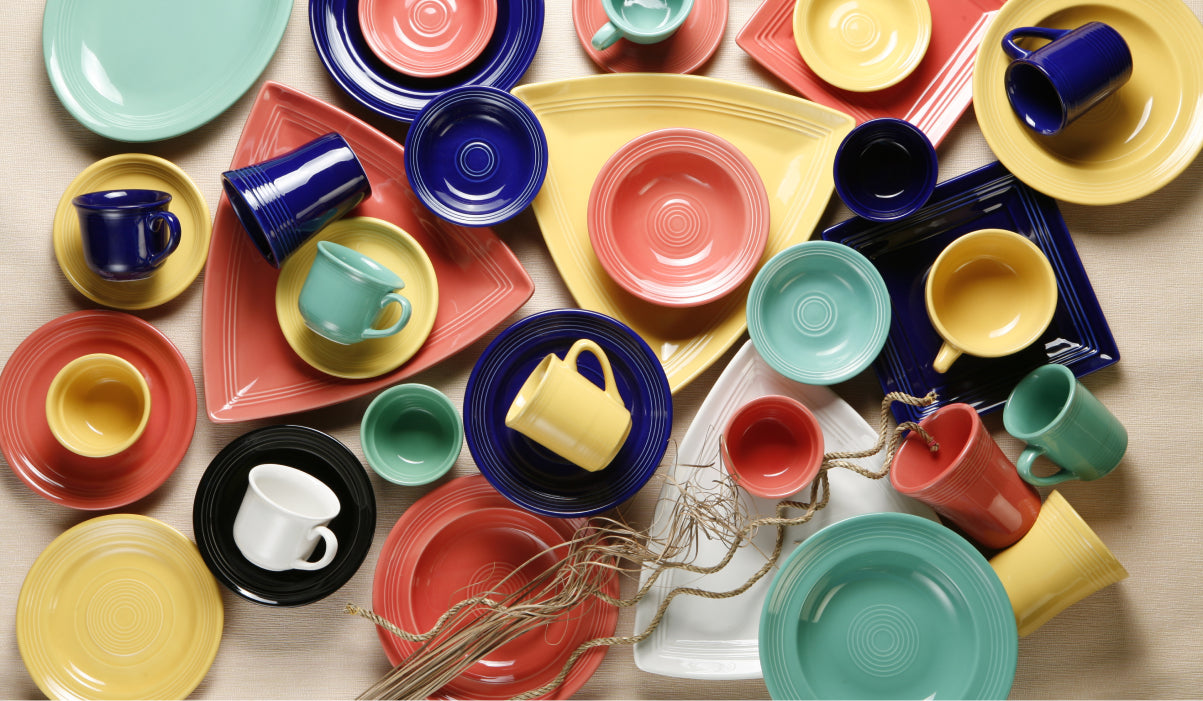
The collection's ceramic casseroles fill out the spread. They come in oval, rectangular, square and round shapes and go from freezer to oven to table, so a side can bake and serve in the same piece. They're oven safe to 500°F, come in a variety of finishes, each with a porcelain white interior that lets the food stand out. Put the metal pans and colored casseroles on the same table or buffet line and the spread looks festive before anyone adds a garnish.
One tip if you add shared sides: decide up front how many people each one is meant to serve, and print it on the menu ("serves 2 to 3"). Guests order the right number, and less of it comes back to the dish pit.
A note for healthcare and senior living
In hospitals and senior living, the goal flips: you want residents to finish a full portion. Since a wide rim makes food look bigger, a narrower rim with a larger well can make a full serving look more manageable for someone with a small appetite.
Frequently asked questions
Will guests feel shortchanged by smaller portions? Not if they chose it and the plate looks complete. The pushback usually comes when a regular portion quietly shrinks at the same price. Offering a smaller option next to the original avoids that.
Should a smaller portion cost less? Yes, but rarely half. Labor and dishwashing don't shrink with the portion, so price it from your own recipe costs.
Does a wide rim help with bowls too? The same principle applies. Wide-rim pasta bowls are a natural fit for half-portion pastas and grain bowls.
What serveware works best for shared sides? Pieces that can go straight from the oven to the middle of the table. Tuxton's DisplayTux collection pairs stainless steel and copper oval serving pans with ceramic casseroles that are oven safe to 500°F and come in a variety of sizes and shapes.
Thinking about adding smaller portions?
Tell us what you're serving and which plates you're using now, and we'll help you find a wide-rim plate that fits your menu and your table.
Browse Tuxton dinnerware · 909.595.2510 · Info@tuxton.com